Incident management in IT is the process of identifying, logging, prioritizing, and resolving unplanned interruptions or degradations in IT services. Its goal is to restore normal service as quickly as possible, limit the impact on users and the business, and find the root cause so the same problem does not happen again.
Incident management is the process of identifying and resolving problems that occur in IT services. Incident Management is also used as a metric to measure the health of the IT Service Desk. Let’s discuss what incident management is, why it matters to your business, and how you can apply it to your organization.
Key takeaways
- Incident management covers the full lifecycle of IT service incidents, from detection and logging to resolution, closure, and steps that prevent the same problem recurring.
- Common incident types include IT support incidents, network incidents, software development lifecycle incidents, and incidents raised from monitoring event alerts.
- A sound process tracks and notifies incidents, sets policies, drives recovery and root cause analysis, then closes, documents, and reviews each incident.
- Clear communication across teams, vendors, and partners, combined with automated incident resolution, helps organizations improve metrics such as MTTD and MTTR.
What is Incident Management
Incident management aims to manage the lifecycle of all incidents in IT services. Incident Management (or IM) is a process that is used with or without ITIL, which, if done right, can help managers identify and resolve problems as they happen instead of when they’re too late. For IM to work effectively, it needs a system that identifies when incidents are reported and implements a solution. Incident Management aims to fix problems and make sure the same problem doesn’t happen again.
Types of Incidents in IT
Some of the common types of incidents where incident management is helpful are:
- IT Support Incidents
- Network Incidents
- System Development Life Cycle(SDLC) incidents
- Event Alert Incident
Incident management can be used for any tasks involving specific procedures that need to be followed.
Key Steps of the Incident Management Process:
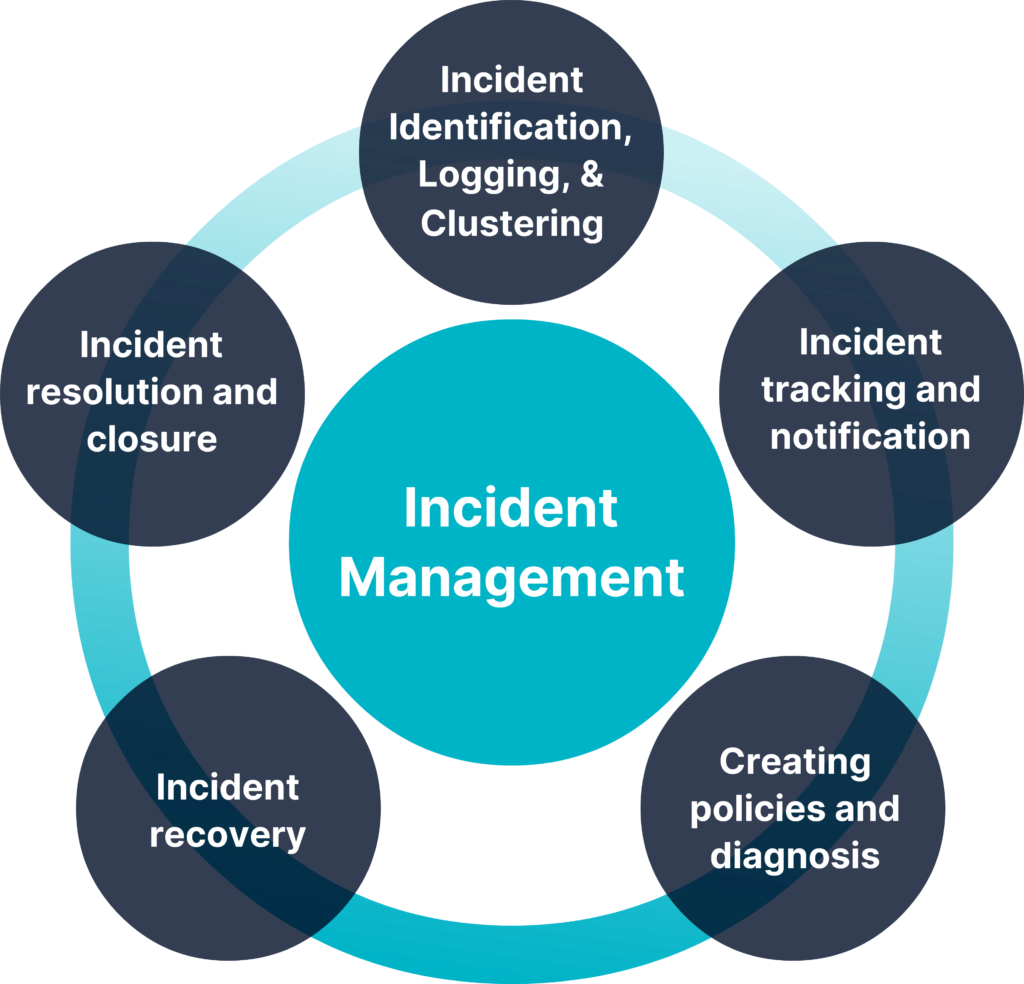
- Incident tracking and notification
The incidents are tracked and logged based on what is causing the incident and how incidents can be resolved. It can then be notified to the concerned team via relevant channels such as Slack, Teams, or Email. - Creating policies and diagnosis
Develop policies for when to make exceptions to the process or create exceptions to solve an incident. - Incident recovery
This step involves the IT personnel responding to incidents and ensuring they know what needs to be done. It is also essential to find the root cause of the incidents and make sure that the incidents do not occur again. - Incident resolution and closure
The final step is to ensure that the incident is resolved and the systems are fully functional again. Here we close the incident, document the events, submit a report to build transparency, and review the procedures followed during the incident management.
Checkout this Case Study on how a Large Retail Company in the US gains major time savings with Automated Incident Resolution
The client is a large retail company based in the US. They recently expanded their market by acquiring regional brands with their physical stores and introducing their own e-commerce offerings.
With increasing downtime frequency and duration from their e-commerce and POS systems, the management was also concerned about the impact on customer experience and revenue.
Before implementing the Automated Incident Resolution, the company was facing an increase in key incident management metrics like MTTR & MTTD. After implementing the Automated Incident Resolution, there has been a significant improvement in the key metrics like MTTR & MTTD.
Implementing a Successful Strategy for Incident management
Companies need to have an incident management strategy in place because it will take time and effort. Proper communication between employees and other departments will help prevent big problems by being notified of incidents as soon as they happen. Ideally, this will include all of the employees and IT teams dealing with incidents in real-time. This could also involve communicating with vendors and partners about any issues that have come up.
Thoughts on the Future of ITSM with regards to Incident management
The future of incident management is promising. In these highly dynamic and digital environments, both customer and internal demands are constantly changing, and incident management will need to evolve with the needs of the time to keep pace. As the industry matures and technology develops, it becomes easier to deploy processes that are managed through an automated incident management platform. This will allow for a quicker resolution, and simple incidents will be swiftly resolved, while more complicated or longer-term issues that require outside expertise will be handled efficiently.
Frequently Asked Questions
What are the steps of incident management?
The core steps of incident management are tracking and notification, policy setting and diagnosis, recovery, and resolution and closure. Incidents are logged and routed to the right team through channels such as Slack, Teams, or email. Responders then diagnose and restore service, identify the root cause, and finally close the incident, document what happened, report on it, and review the procedures they followed.
What is the main goal of incident management?
The main goal of incident management is to restore normal IT service as quickly as possible while minimizing impact on users and the business. A good process also looks beyond the immediate fix. Teams identify the root cause of each incident and take steps so the same problem does not happen again, which reduces repeat outages over time.
What is the difference between incident management and problem management?
Incident management focuses on restoring service quickly when something breaks, while problem management focuses on finding and removing the underlying cause of one or more incidents. In ITIL terms, an incident is a single unplanned interruption, and a problem is the cause behind it. In practice the two work together, since incident teams often surface the root causes that problem management then fixes.
What are MTTD and MTTR in incident management?
MTTD and MTTR are two key metrics used to measure incident management performance. MTTD, mean time to detect, is the average time it takes to discover that an incident has occurred. MTTR, mean time to resolve, is the average time it takes to restore service after detection. Lower values for both usually mean less downtime and less impact on customers.
How does automation help with incident management?
Automation helps incident management by detecting, routing, and resolving incidents with less manual effort. An automated incident management platform can resolve simple, recurring incidents quickly, notify the right team in real time, and free skilled staff to focus on complex or longer-term issues. Organizations that adopt automated incident resolution typically aim to lower key metrics such as MTTD and MTTR.